

Key Takeaways
- Deploying realtime reports gives firm leadership immediate visibility into key operational metrics, transaction flows, and filing milestones.
- Monitoring comprehensive payment logs ensures precise financial tracking, secure revenue reconciliation, and instant auditing capabilities across all client accounts.
- Utilizing detailed client logs and user logs guarantees strict role-based access control, accountability, and seamless workflow transparency at Tax Office Portal.
The hectic environment of tax preparations and accounting management necessitates that you do not proceed without sight. Contemporary organizations need immediate clarity, total transparency of operations, and immediate access to transactional data. Changing your data analysis method from being retroactive to proactive alters everything about your operation.
Utilizing live analytics and automatic activity tracking enables you to streamline your processes, ensure protection of sensitive data, and properly allocate manpower. Let’s explore how integrating high-impact realtime reports elevates your entire digital infrastructure.
1. The Strategic Value of Realtime Reports in Tax Practice Management
Standard reporting usually includes accessing disjointed data sets once the deadlines have been missed, making it impossible for managers to fix problems in real-time.
- Instant Operational Visibility: Realtime reports include live data feeds that show current status of returns, signature status of clients, and daily volume of processing all in one centralized dashboard.
- Proactive Bottleneck Identification: Identify bottlenecks in the process flow immediately and assign work accordingly or help out your staff before it is too late.
- Data-Driven Decision Making: Allow firm partners to evaluate the busy periods, demands on the services, and employee productivity.
2. Tracking Revenue and Cash Flow with Payment Logs
Financial transparency is the bedrock of any successful professional service firm. Handling multiple invoices and filing fees for multiple clients in high season requires proper tracking mechanisms.
- Complete Payment Logs: Full payment logs capture every incoming payment, retainer payment, and invoice closing at the very instant, leaving no room for discrepancy between the work done and the amount collected.
- Automatic Reconciliation: Connect your payment tracking system with your accounting software to make your day-end reconciliation easier.
- Security and Traceability of Transactions: Ensure that you have a foolproof log of the payment times and transaction ID associated with the client.
3. Optimizing Engagement Through Detailed Client Logs
Understanding how and when the clients use your online portal is critical for providing top-notch customer service and retaining your clients successfully.
- Dedicated Client Logs: Dedicated client logs monitor the time stamps of uploaded documents, number of logins in the portal, and history of messages in each account.
- Insights into Behaviors: Discover which clients need help or face difficulties with the online process and let your customer service team contact them.
- Compliance Readiness: Record the exact times when tax documents were sent, examined, and approved by each of your clients.
4. Enhancing Security and Accountability via User Logs
In an industry handling highly sensitive financial data, internal security, and compliance monitoring are non-negotiable priorities.
- Granular User Logs: Advanced user logs track every staff member’s system activity, including file downloads, tax return edits, and permission changes within the platform.
- Preventing Unauthorized Access: Real-time tracking of staff interactions ensures compliance with data privacy regulations and deters internal security breaches.
- Performance Accountability: Evaluate internal efficiency by reviewing how individual team members navigate the platform and execute assigned tasks throughout the tax season.
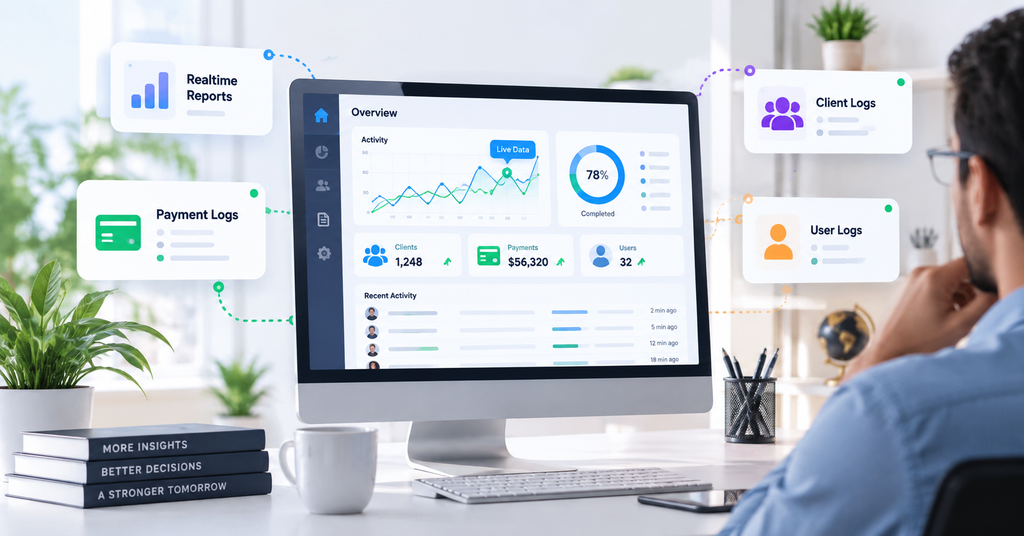
5. Integrating Analytics Into Your Broader Digital Ecosystem
Maximizing the utility of realtime reporting requires a cohesive technological foundation. When your payment tracking, user histories, and client interaction logs feed directly into your central management architecture, your firm operates with unprecedented cohesion. This interconnected visibility eliminates communication silos between preparers, administrative staff, and firm leadership.
How does realtime reporting increase tax office efficiency?
Realtime reports make it unnecessary to manually generate status reports since all active workflows, client tasks, and employee workload become automatically visible. This helps managers to overcome any bottlenecks right away and ensures that the whole team is in sync with their daily filing requirements.
Final Thoughts: Upgrade Your Firm Intelligence Today
The use of old-fashioned static reporting mechanisms reduces the effectiveness of your firm’s operations and creates risks. With the help of real-time analysis dashboards, transaction details tracking, and activity reporting, you ensure your data safety and increase your daily productivity.
Streamline your practice operations, enhance security, and discover advanced digital workflow solutions at Tax Office Portal today.