

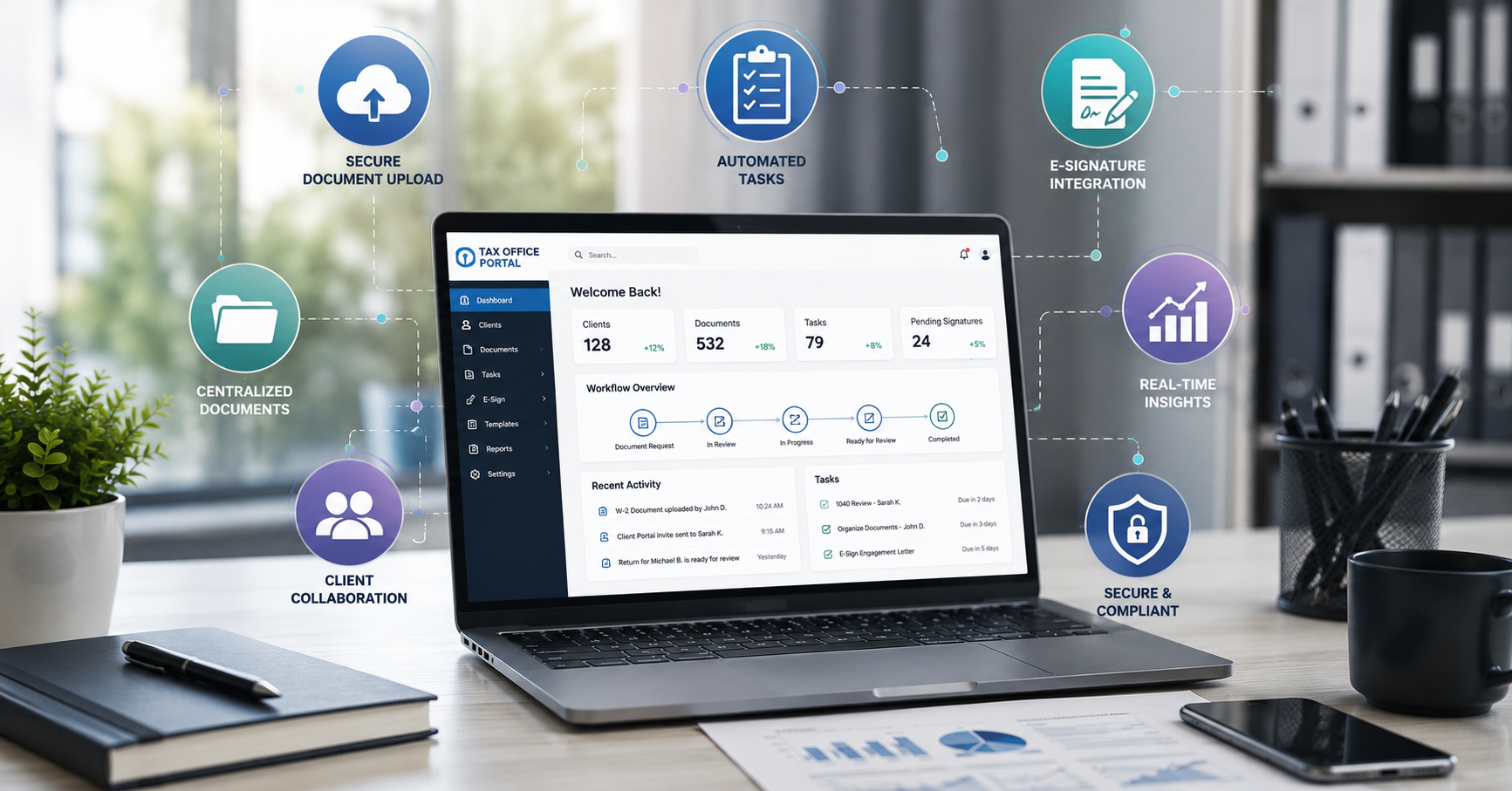
In today’s fast-paced financial climate, tax professionals are constantly battling the “document chase.” When your process relies on fragmented email threads, manual data entry, and disjointed software, productivity suffers and the risk of error rises. At Tax Office Portal, we help you move beyond these bottlenecks, providing a secure, centralized hub designed to streamline workflows and bring modern efficiency to your practice.
Why Modern Practices Need to Streamline Workflows
Efficiency is not just speed anymore; efficiency now means being smart. Fragmented processes serve as a silent tax on your productivity that makes you move from one system to another in order to deal with documents, correspondence, and filing statuses. With centralization of all your processes, you will transform a disorganized tax season into an efficient cycle.
How to Streamline Document Workflows
The best method of eliminating friction is by viewing documents as the glue that holds all aspects of your service together, starting from engagement all the way to archiving.
- Automated Intake: Replace emails for documents with an automated portal system in which all the materials can be uploaded at once without any need for constant back-and-forth emails and encryption of sensitive information right away.
- Centralized Workspace: Leverage technology that gives you real-time insight. Having the preparer and client access the same workspace ensures that no versions get mixed up, with everybody accessing the single source of truth.
- Automated Archiving: Implement an automated process in which your compliance policies are followed after processing is completed, sorting the file, naming it and storing it in the correct place.
Beyond the Desk: Scale Up Your Firm Efficiently
Firms will take a view of the whole ecosystem to find opportunities. While document management is the core of tax prep, you should also look at how to streamline retail workflows within your broader firm.
- Reconciliation & Automation: Use accounting tools that support auto-categorization and regular, automated reconciliation. By processing transactions in real-time rather than waiting for month-end, you smooth out your workload.
- Clear Role Definitions: Bottlenecks often happen when tasks stall because of a single point of failure. By using a platform that allows for role-based access, you can delegate tasks or delegate approval authority to ensure work keeps moving even when specific staff members are unavailable.
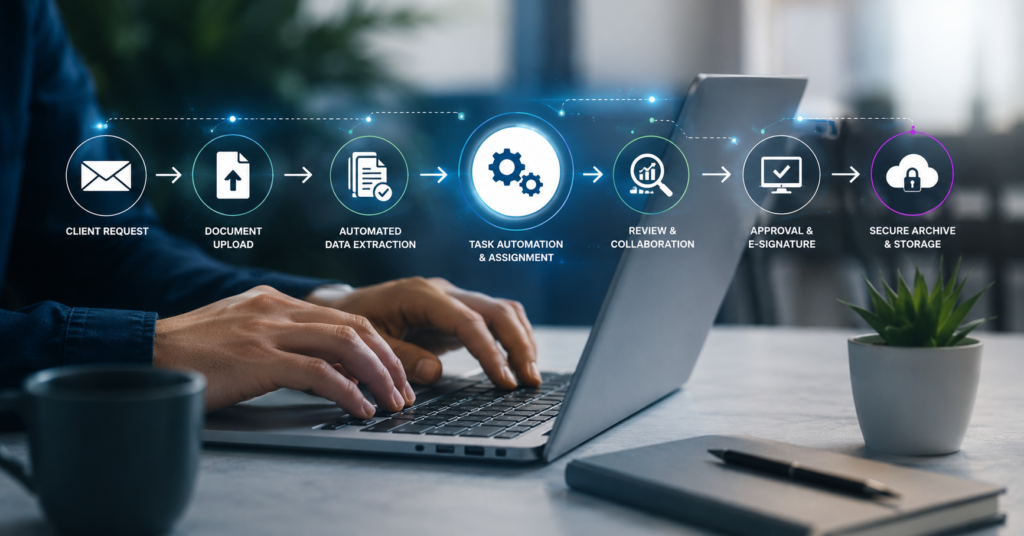
Embracing the Future: AI-Powered Efficiency
The newest frontier in efficiency involves platforms that streamline AI workflows. Tax software solutions of today not only archive files but also read them.
- Automated Data Extraction: Using advanced AI, the software can extract data from source documents and load it into your tax software solution. In doing so, your staff becomes “strategic reviewers” instead of “data entry clerks”, which enables them to concentrate on advisory activities.
- Self-Correcting Review: Ensure that the AI tools use a self-correcting method, where each number is checked against the source document to detect errors such as transposition errors or missing schedules.
Getting Started With Your Smart Tax Practice
Your transformation to smart tax practices will be not only technological but also an improvement of your professional appearance. A dedicated portal does more than just organize files, it builds trust. At Tax Office Portal, we provide the tools to help you reduce manual burden, ensure SOC 2-level compliance, and ultimately reclaim the time you need to focus on what matters most: growing your firm and building client relationships.
